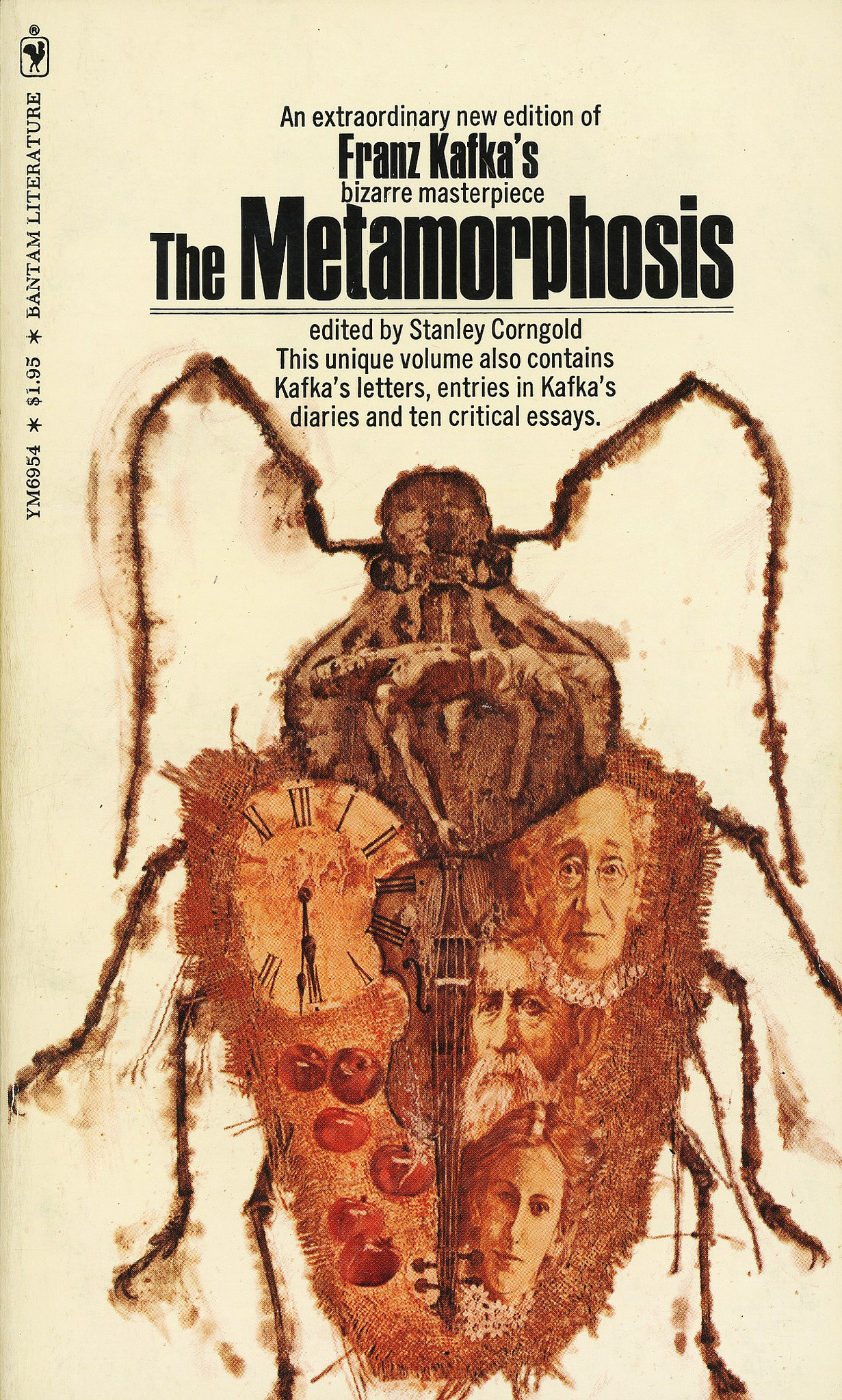
#1:As Gregor Samsa awoke one morning from uneasy dreams he found himself transformed in his bed into a gigantic insect.
- This translation is very similar to the third translation. The start of the translation with as makes the reader seem like they are in the situation and the story is happening in real time.
#2:Gregory Samsa woke from uneasy dreams one morning to find himself changed into a giant bug.
- This is the only translation that doesn't include the word bed. This could make the reader think a lot more about where the character being described it, could he be prisoner of a scientist doing experiments?
- Shortest of the translations, gets straight to the point and doesn't use much description, flows through the sentence very well.
#3:When Gregor Samsa awoke from troubled dreams one morning he found he had been transformed in his bed into an enormous bug.
- The use of the word when makes the setting of the story seem like the past. Could make the reader think that the author started with a flashback or that the story is narrated from someone other than Samsa.
#4:One morning, upon awakening from agitated dreams, Gregor Samsa found himself, in his bed, transformed into a monstrous vermin.
- This translation uses the words monstrous vermin do describe what Samsa turned into. The other translations use the word bug or insect. This translation is much more descriptive and makes the transformation seem much more dark.
- Translation is split up in multiple areas by commas, makes the reader pause when reading and doesn't flow as well.
How does the word choice, syntax, punctuation, and imagery shift in each affect meaning? Is one more effective than another? Why? What does this exercise bring up about the difficulty of reading translated texts? How do different translations effect the tone of the sentence?
There are many stylistic features that differ in each of the translation that affects the way it is read by readers. Each translation relays the same general idea of a character waking up and he has been turned into some kind of bug. The differing dictions in each of the translations create a different understanding for readers though. Some of the translations make the story seem like it is told from a narrator other than Gregor Samsa whereas another makes it seem like he is the narrator telling the story of his transformation. Another big difference in diction is when describing what he turned into. The fourth translation uses a much more descriptive choice of words to describe what he turned into, this made it seem like a much more dark intro and made it seem like he was much scarier than a bug after his transformation. Each translation has a much different tone from the other due to the diction and syntax of each. The fourth translation differs greatly from the other three, the use of all the commas and the description of the transformation as a monstrous vermin makes the tone much darker than the other translation and could make the reader believe the whole story to be dark.
This exercise is truly revealing of why texts that have to be translated can be difficult to read. Both Metamorphosis and Stranger are both example os how different translations can affect the reader. The choice of the translator can significantly affect the interpretation of the text. This is very significant for the opening sentence of both pieces of text, the differences can completely control the view a reader has for a text from the start. With the ability for the whole meaning of the story to be affected the true meaning that the original author could have wanted may not be presented correctly. This is also hard to be sure because most times the author is not alive to prove wether the author's true purpose is portrayed in translations.

Good response- you provided a detailed analysis of each of the translations and that helped you look critically at the effect, purpose, intention, etc. of translations in the final question.
ReplyDelete