Sunday, March 20, 2016

Livin the Dream

1. How would you describe the “American Dream?”

I think that all people have their own definition of the American Dream.  My definition of the American Dream has many different aspects that influence it.  Aspects of my life that I would describe as my American Dream would be to have a family with strong, healthy, smart kids, a wife that has a job that she enjoys and I myself have a job that I enjoy.  Hopefully the jobs that my wife and I have would provide plenty of money to support our kids and give us money to spend on some extravagant items.

2. What is your definition of wealth?

I think that there are many different areas of life where the word wealth could be used.  When I first think of wealth I think about how much money an individual has just like almost all people.  But when I begin to think deeper about the word wealth I think of different types of wealth, like a wealth of knowledge or wisdom.  I think that all these types of wealth are very desirable for all people because of the affect it can have on a person's life.

3. What are Americans’ attitudes toward wealth and poverty?

I think that the attitude towards wealth and poverty differs on the person and what their economic status in society is.  I think that poverty is an idea that is misunderstood by many people that don't face economic struggles wether it be kids with parents that make good money or individuals that are wealthy.  I think what these kind of people think poverty is being homeless and starving but that is far from it.  I think that Americans also misunderstand wealth at times.  They see wealth as being famous and not having to do much, like actors or athletes.  These people are wealthy but I think Americans can see wealth as a future shaped by hard work.

4. What is your attitude toward wealth and poverty?

My attitude is very similar to many Americans, growing up with parents that were able to support me I had a distorted idea of what poverty was until I matured and learned more and realized what poverty actually was.  I think my attitude toward wealth differs somewhat from what most Americans think, I believe that wealth is dependent on happiness and dedication.  I think that someone can make all the money in the world but if they don't like what they're doing then they won't enjoy their wealth all the way.

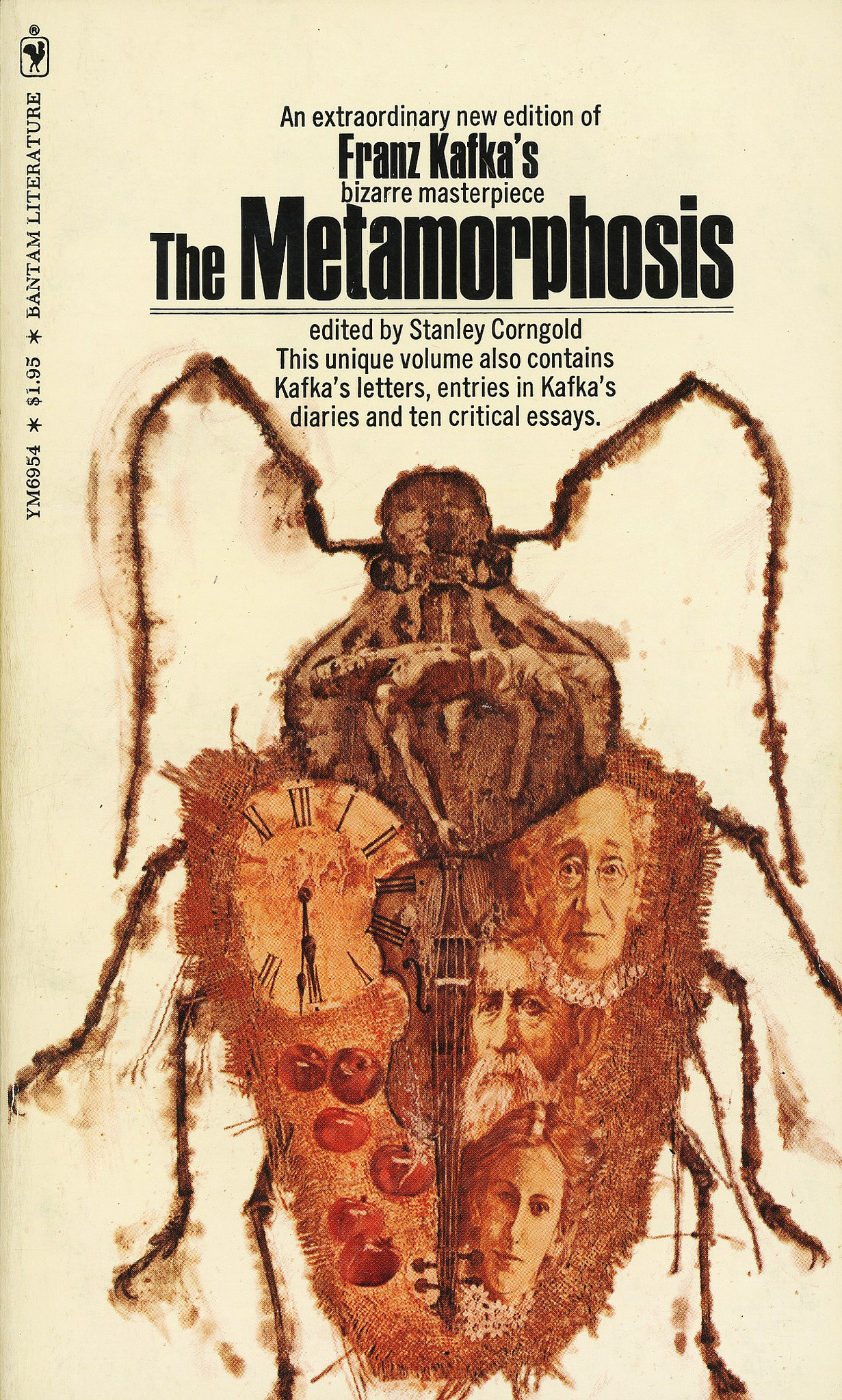
Sunday, March 6, 2016

Translation


#1:As Gregor Samsa awoke one morning from uneasy dreams he found himself transformed in his bed into a gigantic insect.

  • This translation is very similar to the third translation. The start of the translation with as makes the reader seem like they are in the situation and the story is happening in real time.


#2:Gregory Samsa woke from uneasy dreams one morning to find himself changed into a giant bug.
  • This is the only translation that doesn't include the word bed. This could make the reader think a lot more about where the character being described it, could he be prisoner of a scientist doing experiments?
  • Shortest of the translations, gets straight to the point and doesn't use much description, flows through the sentence very well.


#3:When Gregor Samsa awoke from troubled dreams one morning he found he had been transformed in his bed into an enormous bug.

  • The use of the word when makes the setting of the story seem like the past. Could make the reader think that the author started with a flashback or that the story is narrated from someone other than Samsa.

#4:One morning, upon awakening from agitated dreams, Gregor Samsa found himself, in his bed, transformed into a monstrous vermin.

  • This translation uses the words monstrous vermin do describe what Samsa turned into. The other translations use the word bug or insect. This translation is much more descriptive and makes the transformation seem much more dark.
  • Translation is split up in multiple areas by commas, makes the reader pause when reading and doesn't flow as well.

How does the word choice, syntax, punctuation, and imagery shift in each affect meaning? Is one more effective than another? Why? What does this exercise bring up about the difficulty of reading translated texts? How do different translations effect the tone of the sentence?

There are many stylistic features that differ in each of the translation that affects the way it is read by readers. Each translation relays the same general idea of a character waking up and he has been turned into some kind of bug. The differing dictions in each of the translations create a different understanding for readers though. Some of the translations make the story seem like it is told from a narrator other than Gregor Samsa whereas another makes it seem like he is the narrator telling the story of his transformation. Another big difference in diction is when describing what he turned into. The fourth translation uses a much more descriptive choice of words to describe what he turned into, this made it seem like a much more dark intro and made it seem like he was much scarier than a bug after his transformation. Each translation has a much different tone from the other due to the diction and syntax of each. The fourth translation differs greatly from the other three, the use of all the commas and the description of the transformation as a monstrous vermin makes the tone much darker than the other translation and could make the reader believe the whole story to be dark.

This exercise is truly revealing of why texts that have to be translated can be difficult to read. Both Metamorphosis and Stranger are both example os how different translations can affect the reader. The choice of the translator can significantly affect the interpretation of the text. This is very significant for the opening sentence of both pieces of text, the differences can completely control the view a reader has for a text from the start. With the ability for the whole meaning of the story to be affected the true meaning that the original author could have wanted may not be presented correctly. This is also hard to be sure because most times the author is not alive to prove wether the author's true purpose is portrayed in translations.